
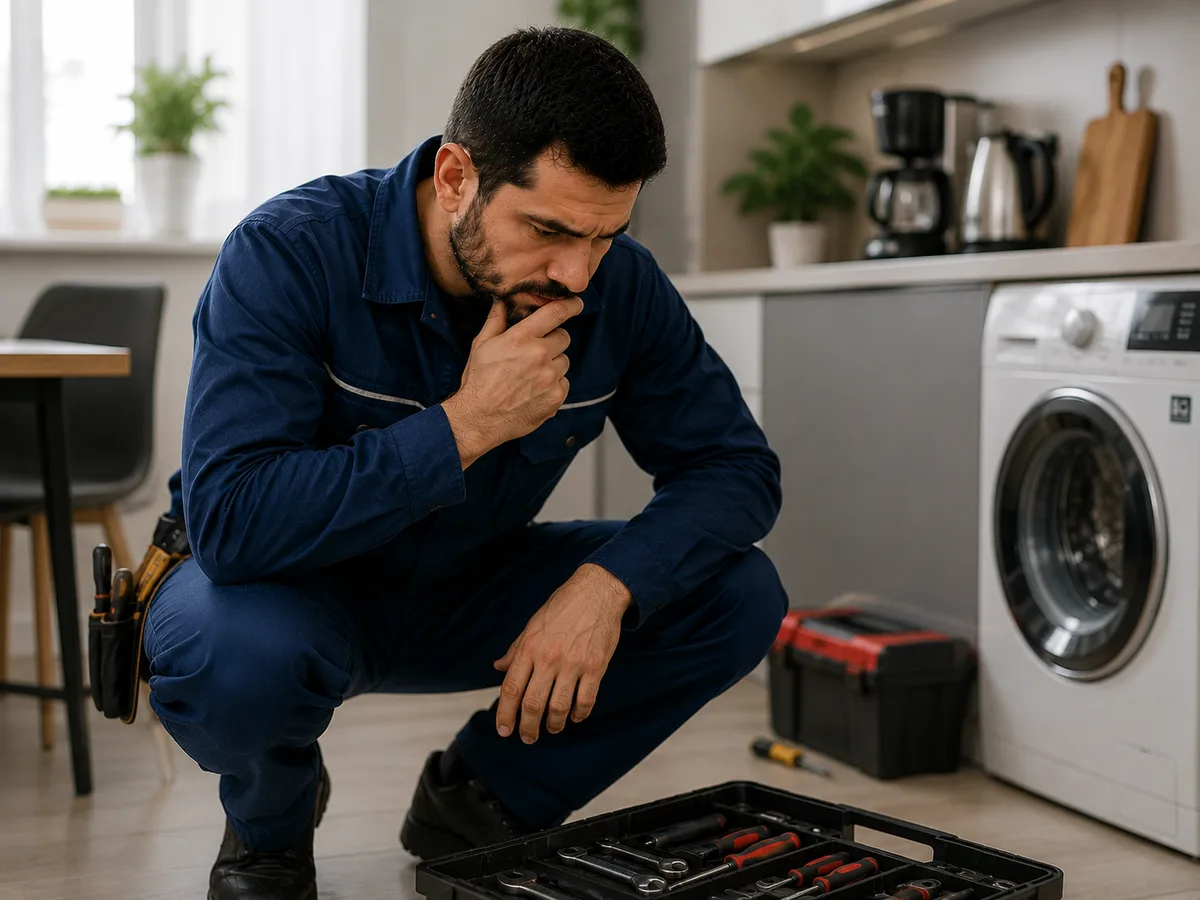
When repair work is needed at home, in an office, or at another property, choosing the right technician directly affects the quality of the work. An inexperienced technician or someone who does not specialize in the relevant field may fail to solve the original problem, make the issue worse, cause additional expenses, and in some cases create a dangerous situation. For this reason, it is better to consider several important factors together rather than focusing only on price.
First, it is important to check whether the technician specializes in the specific type of work you need. For example, boiler, air conditioner, refrigerator, washing machine, dishwasher, television, electrical, and plumbing repairs all require different knowledge and experience. A technician who performs well in one field may not necessarily have the same level of expertise in every other area. Choosing a specialist who is experienced in the specific type of fault usually leads to better results.
The technician’s work experience is also one of the main criteria. A technician who has worked in the same field for a long time is likely to have dealt with more brands, models, and types of faults and may therefore identify the problem more quickly. However, the number of years of experience alone is not enough. Practical experience with the specific fault is also important.
Be cautious if a technician recommends replacing a part immediately without first carrying out a proper diagnosis. A professional approach involves identifying the cause of the problem first and then explaining which component needs to be repaired or replaced. The same symptom can be caused by different faults, so replacing parts based only on symptoms may lead to unnecessary expenses.
It is important for the price to be explained as clearly as possible before the repair begins. After diagnosis, you should receive information in advance about the work to be carried out, the parts that need to be replaced, and the service cost. This helps prevent unexpected additional expenses later. In some cases, the final price can only be determined after the appliance is opened, but even then, the reason for any extra cost should be explained beforehand.
An unusually low price should not always be seen as an advantage. In some cases, a very cheap offer may involve low-quality spare parts, incomplete repairs, or only a temporary solution. At the same time, a high price does not automatically guarantee high quality. What matters most is what work will be performed, which parts will be used, and what result is expected.
It is also important to ask about the quality of the replacement parts. There can be significant differences in both price and service life between original parts, high-quality compatible alternatives, and used parts. The technician should explain in advance which type of part will be installed and what the differences are between the available options.
It is useful to ask whether a warranty is provided for the completed work. A warranty shows that the technician accepts responsibility for the repair and the replaced part. The warranty period may vary depending on the type of work and the part used, so it is important to clarify in advance exactly what the warranty covers.
It is especially important for the technician to follow safety rules during the work. Incorrect handling of electrical systems, gas systems, boilers, air conditioners, and other technical equipment can be dangerous for both the appliance and the user. A professional technician should use appropriate tools and measuring equipment and inspect the system safely.
A technician’s ability to clearly explain the cause of the fault is also a sign of professionalism. Instead of simply saying that “the part is broken,” a good specialist should explain why the problem occurred, which component needs to be repaired or replaced, and what should be taken into account after the repair.
It is also useful to ask in advance how long the repair is expected to take. Some jobs can be completed on-site within a short period, while others may require ordering spare parts or carrying out additional diagnostics. Knowing the estimated duration in advance makes planning easier.
The tools and diagnostic equipment used by the technician also affect the quality of the work. Modern household appliances and electronic devices may require multimeters, pressure measuring devices, gas analysis equipment, and other specialized tools for accurate diagnosis. Not every fault can be correctly identified through visual inspection alone.
Previous work and customer reviews can also be considered when choosing a technician. Repeated complaints of the same type or problems that frequently return after repair may be important warning signs. However, it is generally better to evaluate the overall quality of the service rather than making a decision based on a single positive or negative review.
Punctuality and communication are also part of good service. If the technician is going to be late for the agreed appointment, informing the customer in advance is considered professional behavior. Keeping a customer waiting for a long time without any information can make the service process more difficult.
After the repair is completed, the appliance or system should always be tested. A professional technician should not simply replace a part and leave. The equipment should be tested to confirm that the fault has actually been resolved. For example, a washing machine or dishwasher can be tested with a program, boiler pressure and heating mode can be checked, and the operating temperature of an air conditioner can be measured.
Showing the old replaced part after the repair is also a useful practice in terms of service transparency. This allows the customer to see which part was actually replaced and provides clearer information about the work performed.
In some situations, it is also necessary to evaluate whether the repair is economically worthwhile. For old or seriously damaged appliances, the repair cost may approach the price of a new device. In such cases, a professional technician should not simply recommend repair but should also explain whether the repair is financially reasonable.
Before calling a technician, it is useful to provide as much accurate information about the fault as possible. The appliance brand, model, description of the problem, error code, and when the fault first appeared can help the specialist understand the situation in advance and make it easier to select the right technician.
Pay attention to the following warning signs: if a technician recommends replacing an expensive part without diagnosis, does not provide a price in advance, avoids explaining the work to be done, gives no information about warranty, or does not follow safety procedures, it may be better to choose another specialist.
The main goal when choosing a technician should not simply be to find the cheapest service. It should be to choose a professional who identifies the fault correctly, explains the necessary work in advance, uses suitable replacement parts, and tests the appliance after the repair. The right choice improves repair quality and reduces the likelihood of the same fault returning again within a short time.