
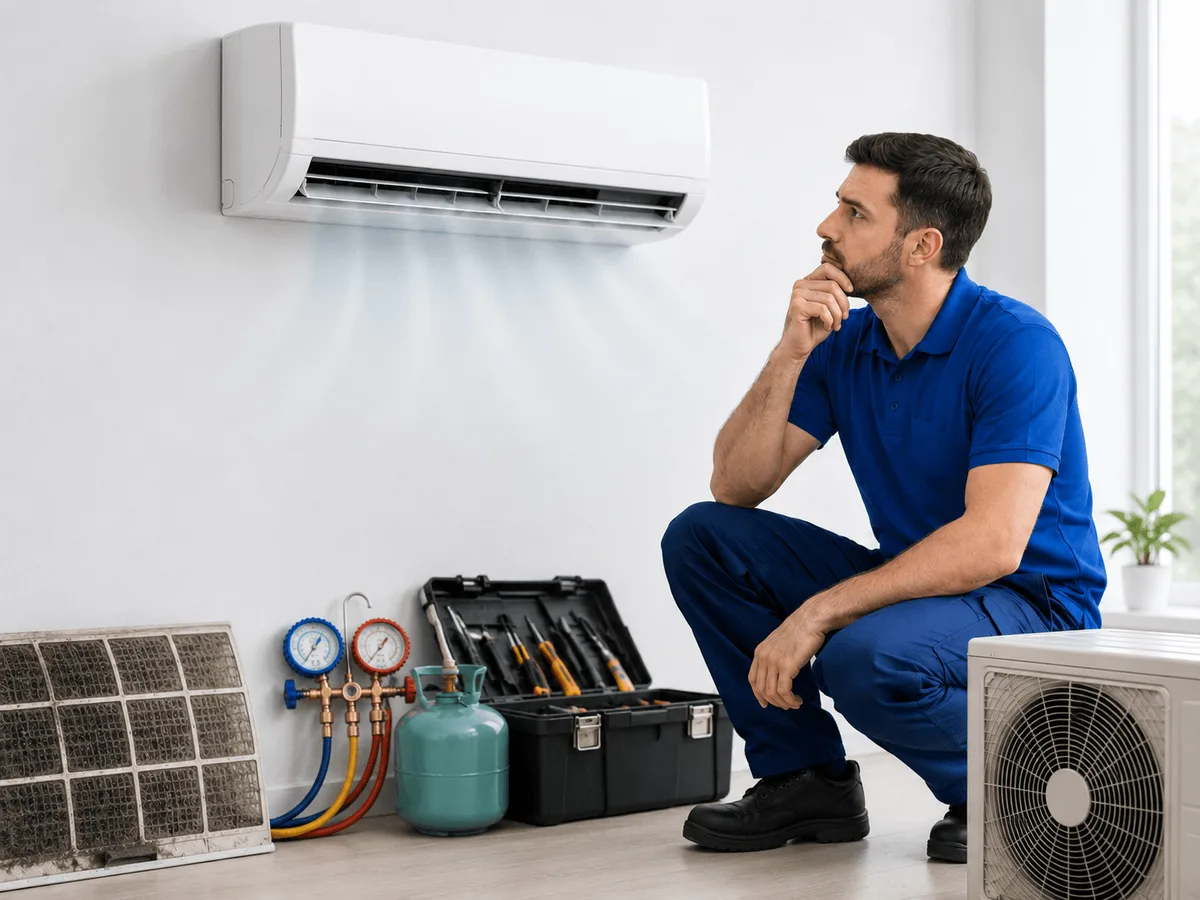
Nobody needs an explanation of what July in Baku feels like without air conditioning. More than half the calls we get this time of year start with the same sentence: "It runs, it blows air, but it doesn't cool." The good news is that some of the causes behind that complaint are things you can find yourself, without calling anyone.
The first and most common culprit is dust-clogged filters in the indoor unit. When the filter is blocked, airflow drops, and no matter how hard the unit works, the room stays warm. Lift the front cover and pull the filters out: if they're coated in a grey layer of dust, rinse them in lukewarm water, let them dry and put them back. It's a two-minute job, and worth doing at least twice a season.
If the filters are clean, the next suspect is low refrigerant. An air conditioner doesn't "use up" gas, but over the years micro-leaks develop at the pipe joints. The signs: frost or ice on the thin pipe running to the outdoor unit, a compressor that keeps stopping and restarting, and cooling that gradually fades. This one is a job for a technician — simply topping up the gas without finding the leak is money thrown away, because the problem comes back within two or three weeks.
Don't forget the outdoor unit either. City dust combined with the humid Caspian air builds a felt-like layer of grime on the condenser coil. And if the unit sits in direct sun most of the day, it can't shed heat and performance drops noticeably. Washing the outdoor unit once a year extends the machine's life and trims your electricity bill.
There's also the cause everyone laughs about, yet it accounts for a fair share of call-outs: the remote is on the wrong setting. The unit is running in "fan" or "dry" mode instead of "cool", with the temperature set to 27-28 degrees. Before calling a technician, check that the snowflake icon is selected and the temperature is somewhere between 22 and 24.
The worst-case scenario is a failed compressor — the heart of the machine and the most expensive repair there is. The consolation is that compressors rarely die suddenly. It's usually the result of years of running with a dirty condenser and low refrigerant. In other words, simple, timely maintenance is exactly what protects you from the most expensive repair.
Watch out for these: water dripping from the indoor unit, ice on the pipes, a burning smell, or a breaker that keeps tripping. If you see any of them, stop using the unit. The "let it limp through the season" approach is how a small fault turns into a major repair.
If your AC shows any of these symptoms, get in touch through ustamvar.az — within Baku we can usually come the same day, diagnose the problem on the spot, and agree the price before any work starts.