
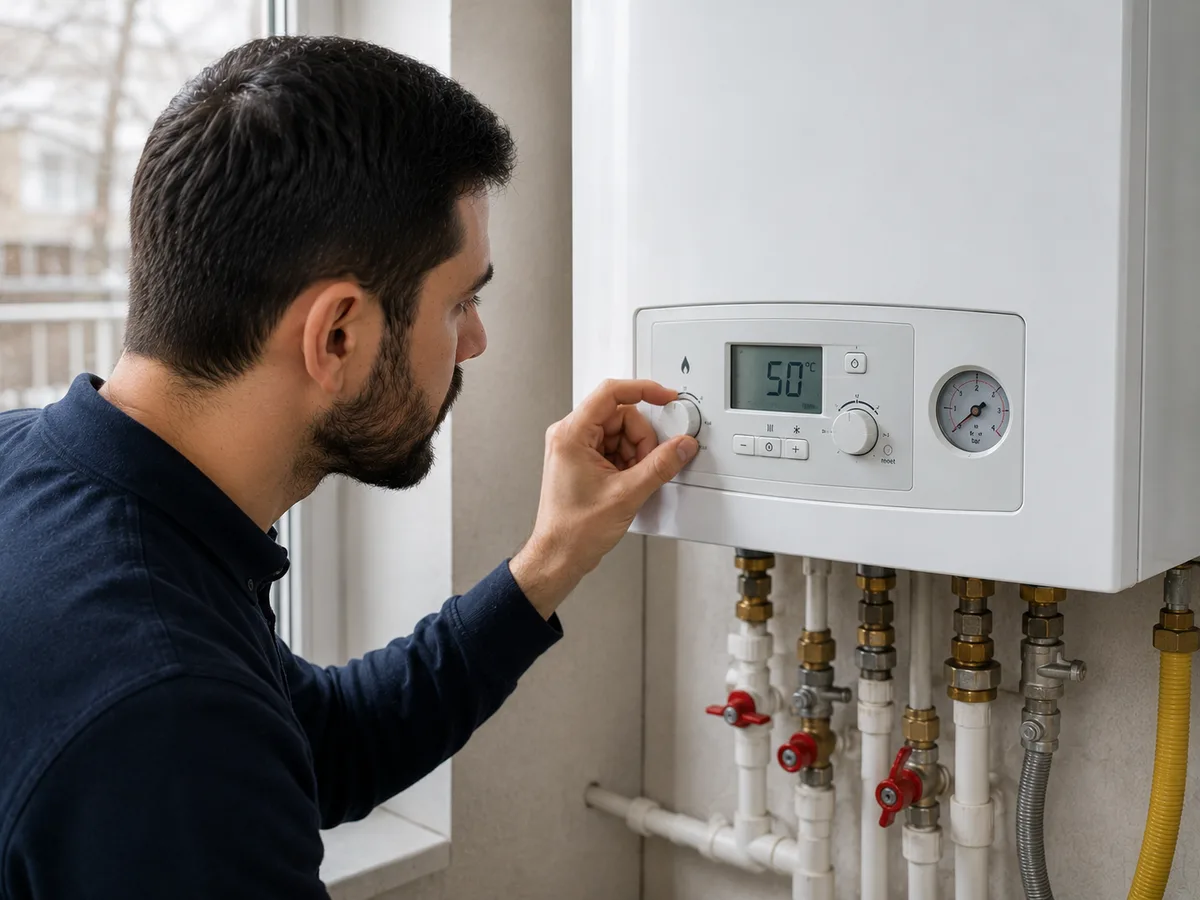
An unstable boiler temperature is a problem that can occur both in the heating system and while using hot water. Sometimes the temperature shown on the boiler display rises and falls rapidly, sometimes the radiators heat up and then cool down, and in some cases the hot water from the tap becomes hot, then cooler, and then heats up again. It can be normal for the burner to switch off after the boiler reaches a certain temperature, but constant and sharp temperature fluctuations may indicate a fault in the system.
First, check the boiler temperature settings. In models where the heating and domestic hot water temperatures are adjusted separately, incorrect settings may cause the appliance to operate differently from expected. If the temperature is set too high or too low, the boiler may switch on and off too frequently, making temperature fluctuations more noticeable.
A faulty temperature sensor is one of the main reasons why a boiler may fail to maintain a stable temperature. The sensor measures the temperature of the water inside the boiler and sends this information to the electronic control board. If the sensor provides incorrect readings, the control board cannot determine the actual water temperature and may switch the burner off too early or keep it running longer than necessary.
A faulty temperature sensor can also cause the temperature displayed on the boiler screen to change rapidly. For example, if the temperature rises sharply within a short period, the burner switches off, and the reading then drops again within a few seconds or minutes, both the sensor and the water circulation system may need to be checked.
Poor performance of the circulation pump is another important cause of unstable temperature. The pump circulates the water heated by the boiler through the radiator system. If the pump is weak, jammed, or unable to provide sufficient circulation, hot water cannot move away from the boiler quickly enough. As a result, the temperature inside the appliance rises rapidly and the safety system may switch off the burner.
Air trapped in the heating system can also affect water circulation. When air accumulates in the radiators and pipes, the normal movement of the heating water is restricted. Some radiators may heat properly while others remain cold, and the boiler temperature may repeatedly rise and fall. Gurgling or water-flow noises from the radiators may also indicate air trapped in the system.
A blocked or scaled heat exchanger can also cause temperature fluctuations. During long-term use, minerals in the water can form deposits inside the heat exchanger. If water cannot flow through the heat exchanger properly, certain areas may heat up quickly, causing the temperature sensor to detect a high temperature and the electronic system to switch off the burner.
If the boiler cannot maintain a stable hot water temperature, the problem may also be related to the domestic hot water heat exchanger. Scale buildup inside the heat exchanger can reduce proper heat transfer. As a result, water from the tap may alternate between hot, warm, and cold. This symptom may become especially noticeable during prolonged use of hot water.
A faulty three-way valve can also cause unstable temperatures. This valve directs heated water between the domestic hot water system and the radiator circuit. If the valve becomes stuck or does not open and close fully, heat may be distributed incorrectly. This can cause fluctuations in both radiator temperature and domestic hot water temperature.
Low water pressure can also prevent the boiler from operating steadily. In most models, normal pressure when the system is cold should be approximately 1–1.5 bar. If the pressure is too low, normal water circulation and boiler operation may be affected. If the pressure drops regularly, there may be a water leak, an expansion vessel problem, or another fault in the system.
A faulty expansion vessel can cause significant pressure changes as the temperature changes. If the pressure rises sharply when the boiler heats up and then drops significantly as it cools, the air pressure and membrane inside the expansion vessel may need to be checked. Such pressure fluctuations can also affect the overall stability of the boiler.
Unstable water flow can also cause changes in hot water temperature. If the water flow from the tap is too weak or changes frequently during use, the boiler may not detect the hot water demand consistently. A dirty or faulty water flow sensor can also cause the burner to switch on and off repeatedly in hot water mode.
Fluctuations in gas pressure may also prevent the boiler from maintaining the selected temperature. If the burner does not receive enough gas, the appliance may be unable to produce the required heating output. A faulty gas valve or a dirty burner can also cause an unstable flame and temperature fluctuations. Gas system inspections and repairs should only be carried out by a qualified professional.
If a room thermostat is used, frequent starting and stopping of the boiler may also be related to the thermostat. Incorrect thermostat placement, unsuitable temperature settings, weak batteries, or an unstable connection between the thermostat and boiler can cause the heating demand to change frequently.
A fault in the electronic control board can also prevent proper temperature regulation. The control board receives information from the temperature sensors and controls the gas valve, burner, pump, and other components. If part of the board is faulty, incorrect signals may be sent to these components, preventing the boiler from maintaining a stable temperature.
The burner switching off after the boiler reaches the selected temperature and switching back on after the temperature drops slightly does not always indicate a fault. This is part of the normal operating principle of many boilers. However, if the appliance repeatedly switches on and off every few seconds, the temperature changes sharply, the radiators heat unevenly, or the hot water alternates between hot and cold, the system should be inspected.
Pay attention to the following signs: if the boiler temperature rises and falls rapidly, the appliance frequently switches on and off, the hot water temperature constantly changes, the radiators heat unevenly, the water pressure fluctuates frequently, an error code appears on the display, unusual noises occur, or you smell gas or burning, do not attempt to work on the internal components yourself. Repairs involving gas, electricity, and the combustion system should be carried out by a qualified professional.
If your boiler does not maintain a stable temperature, it is recommended to contact a professional boiler repair technician. The technician can inspect the appliance on site and check the temperature sensors, circulation pump, heat exchanger, three-way valve, water pressure, expansion vessel, water flow sensor, gas system, and electronic control board. Once the exact cause of the fault has been identified, you will be informed in advance about the necessary work and its cost.