
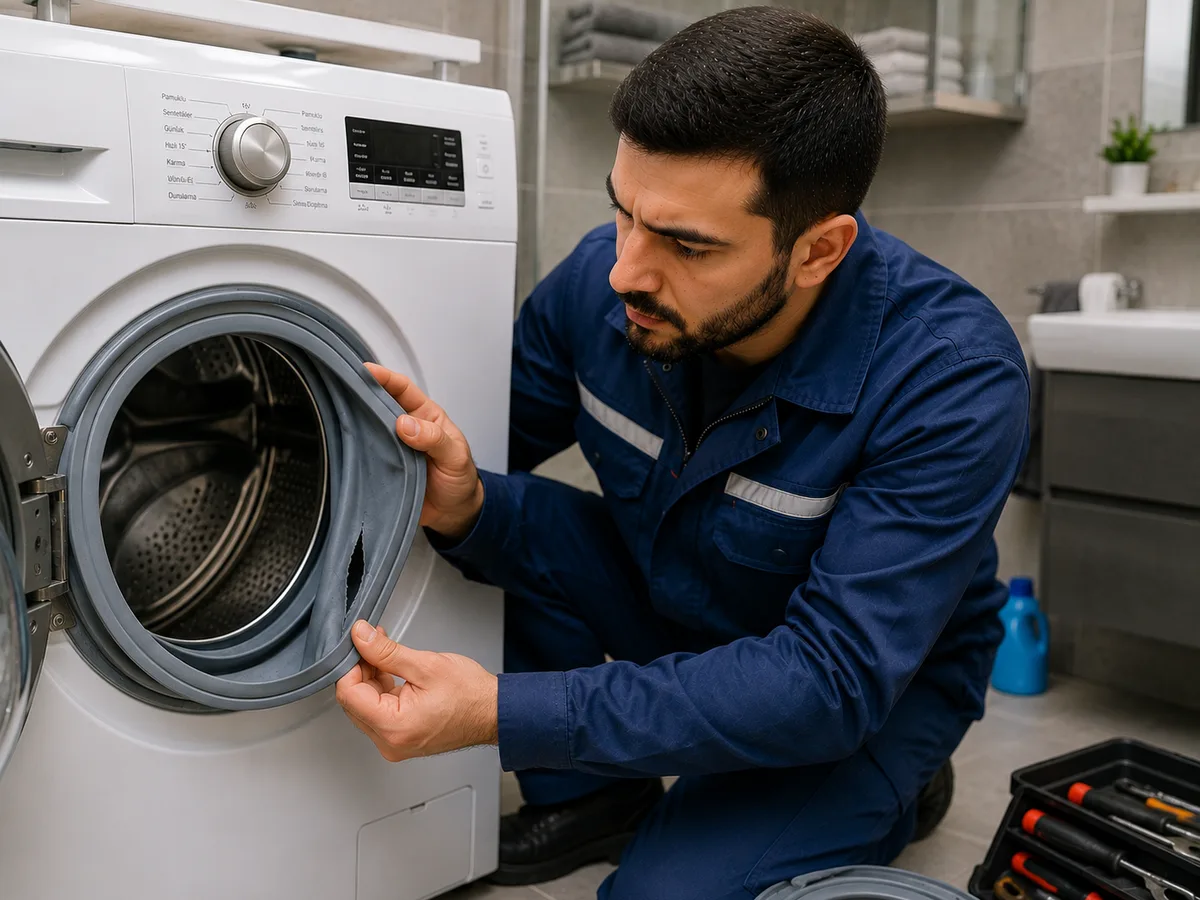
The washing machine door seal, also known as the door gasket or rubber seal, is an important component that prevents water from leaking through the door during a wash cycle. If the seal is torn, punctured, or loses its shape, the appliance may no longer remain watertight.
If there is a small crack or tear in the seal, water leakage may not be noticeable at first. However, as the washing machine operates, vibration, hot water, and detergents can cause the damaged area to become larger.
Water appearing around the lower part of the door is one of the main signs of a damaged seal. If water leaks around the door, especially during washing or rinsing, the rubber door seal should be carefully inspected.
The seal can tear for various reasons. Keys, metal objects, and other sharp items left in clothing pockets can damage the rubber. Zippers, buttons, and metal parts of clothing can also catch on the seal during washing and cause it to tear.
Overloading the washing machine also increases the risk of damaging the door seal. If clothes become trapped between the drum and the door, they can put pressure on the seal and gradually deform it.
After prolonged use, the seal may become hard, lose its flexibility, and develop cracks. In this case, even if there is no large visible tear, the seal may no longer fit tightly around the door and may begin to leak water.
Mold, heavy dirt, and detergent residue can also build up on the seal. If the contamination cannot be removed by cleaning and the rubber has become deformed or damaged, replacement may be necessary.
Repairing a torn door seal with adhesive or other temporary methods is generally not considered a long-term solution. During operation, the seal is constantly exposed to water, temperature changes, and vibration, so the repaired area may open again.
If the seal has only minor surface damage and does not leak water, its condition can be assessed by a technician. However, if the tear is deep, the rubber is punctured, the seal has lost its shape, or water is leaking through the door area, replacing the door seal is usually the more appropriate solution.
A new door seal should be selected according to the washing machine's brand and model. A seal with an incorrect size or design may not fit properly, may prevent the door from closing correctly, or may cause another water leak.
When replacing the door seal, the retaining rings and fasteners are removed, the old seal is taken out, and the new one is installed in the correct position. Incorrect installation can result in water leakage or the seal rubbing against the drum.
After replacing the door seal, it is important to run the washing machine on a test cycle and check for any water leakage around the door.
If the washing machine door seal is torn and leaking water, continuing to use the appliance is not recommended. Leaking water can damage electrical components and flooring and may lead to additional faults.
If the washing machine door seal is torn, it is recommended to contact a professional washing machine technician. The technician can inspect the condition of the seal, determine whether replacement is necessary, and install a new seal suitable for the specific brand and model. You can be informed in advance about the required work and cost.