
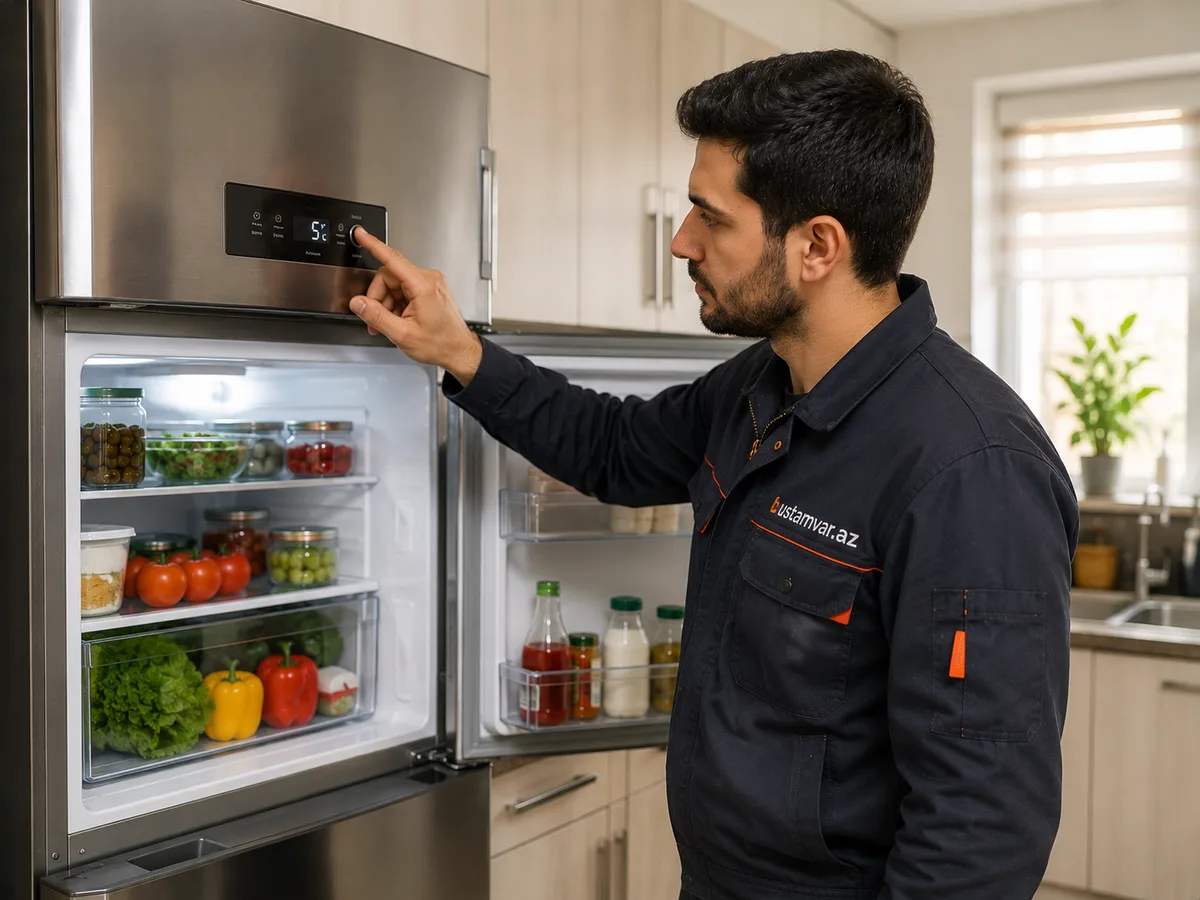
As outdoor temperatures rise during the summer, refrigerators have to work much harder to maintain the proper cooling level. During this season, one of the most common questions we receive is: "My refrigerator doesn't cool well in summer" or "How do I switch my refrigerator to summer mode?" In reality, most modern refrigerators do not have a dedicated "Summer Mode." The key is to set the correct temperature and use the appliance properly during hot weather.
First, check the temperature settings. For most refrigerators, the ideal temperature is 3–5°C (37–41°F) in the refrigerator compartment and -18°C (0°F) in the freezer compartment. If your refrigerator has a mechanical thermostat, it is generally recommended to set it to a medium or slightly higher cooling level during the summer. However, setting the thermostat to the maximum level does not always provide better results. It may cause the compressor to run continuously and increase electricity consumption.
Opening the refrigerator door frequently also reduces cooling performance during summer. Every time the door is opened, warm air enters the refrigerator, forcing the compressor to work longer to restore the desired temperature. For this reason, keep the door open only for a short time and always make sure it closes tightly.
You should also inspect the door gasket. If the rubber seal is loose, worn, or damaged, cold air escapes while warm air enters the refrigerator. As a result, the appliance cools less efficiently and may run almost continuously. A simple paper test can help you determine whether the door is sealing properly.
Dust accumulation on the condenser coils at the back of the refrigerator is another common cause of poor cooling performance during summer. Dust prevents heat from being released efficiently, causing the compressor to work harder, increasing energy consumption, and reducing cooling efficiency. It is recommended to clean the condenser at least once or twice a year.
Overloading the refrigerator can also restrict airflow. When food blocks the air vents, cold air cannot circulate evenly throughout the refrigerator, causing some shelves to remain warmer than others. Arrange food so that it does not obstruct air circulation.
It is also not recommended to place hot food directly into the refrigerator. Hot dishes raise the internal temperature, forcing the compressor to operate under heavy load for an extended period. Allow food to cool to room temperature before placing it inside. This helps protect the refrigerator and reduces energy consumption.
If the temperature is set correctly but the refrigerator still does not cool properly, the problem may be caused by a refrigerant leak, a faulty thermostat, temperature sensor, fan, compressor, or electronic control board. These issues require professional diagnosis.
Pay attention to the following warning signs: if the refrigerator runs continuously, the back of the appliance becomes excessively hot, the interior does not cool sufficiently, the compressor makes unusual noises, or you notice a burning smell, stop using the appliance. Small faults that are not repaired in time can develop into much more expensive repairs.
If your refrigerator is not maintaining the proper temperature during the summer or is not operating correctly, you can contact a professional refrigerator technician through Ustamvar.az. The technician will inspect the appliance on-site, determine the cause of the problem, check the temperature settings and all major systems, and explain the required repairs and costs before any work begins.