
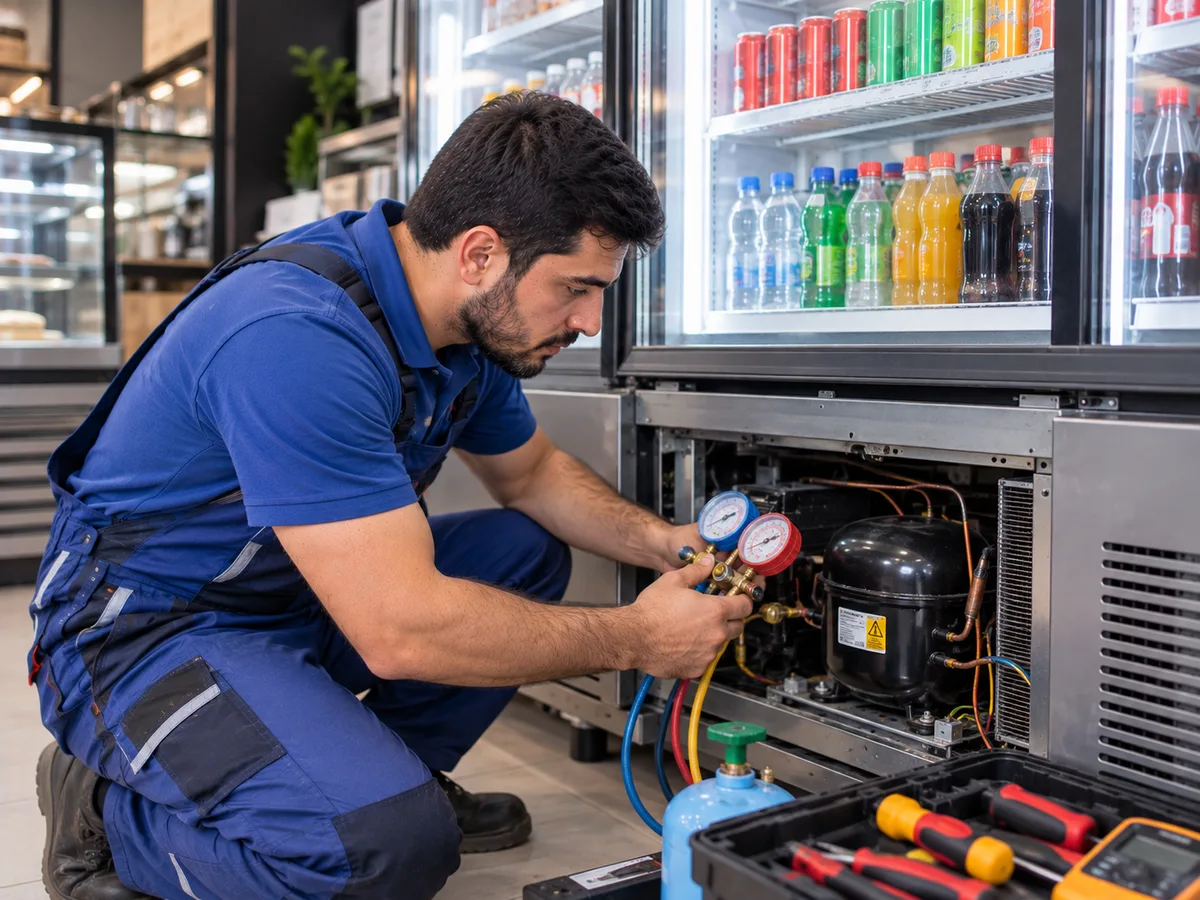
Display refrigerators are used in shops, supermarkets, restaurants, cafés, and other commercial establishments to keep products at the required temperature. A fault in the cooling system can cause the temperature to rise and prevent products from being stored under proper conditions.
One of the most common problems is poor cooling in a display refrigerator. If the unit is running but the internal temperature does not drop to the required level, different components of the cooling system should be checked.
One of the main possible causes is a compressor problem. The compressor is one of the key components responsible for circulating refrigerant through the system.
If the compressor becomes weak or inefficient, it may not generate the required pressure. As a result, the display refrigerator may run for a long time without reaching the required temperature.
If the compressor does not start at all, the problem may not necessarily be with the compressor itself. The start relay, protective components, electrical connections, thermostat, and electronic control system should also be checked.
Another common cause is low refrigerant level. If there is a leak in the system, the amount of refrigerant may gradually decrease, reducing cooling performance.
When the refrigerant level is low, some areas of the display refrigerator may not cool as effectively as before, while the compressor may run for longer periods in an attempt to lower the temperature.
Simply adding refrigerant is not always the correct solution. If there is a leak in the system, the source of the leak should first be identified and repaired. The system should then be charged with the correct type and amount of refrigerant.
A faulty temperature sensor or thermostat can also affect the operation of a display refrigerator. If these components provide incorrect temperature information, the compressor may stop too early or run longer than necessary.
In display refrigerators with electronic control systems, incorrect temperature readings may be caused by a faulty sensor, wiring connection, or electronic control board.
Poor air circulation inside the display refrigerator can also cause temperature differences between different areas. If the fan is running slowly or has stopped completely, cold air may not be distributed evenly throughout the cabinet.
Dirt buildup on the fan blades, fan motor wear, or ice buildup can reduce airflow. As a result, one section of the display refrigerator may cool normally while another remains too warm.
Dust and dirt buildup on the condenser can also reduce cooling performance. If the condenser cannot release heat efficiently, the compressor works under greater load and the overall efficiency of the system decreases.
Doors or glass sections that do not close properly can allow warm air to enter the display refrigerator. Worn or damaged door seals can make it difficult to maintain a stable internal temperature.
The environment in which the refrigerator is installed should also be considered. Placing a display refrigerator near heat sources or leaving insufficient ventilation space around the condenser can place additional strain on the cooling system.
A compressor that runs continuously does not always mean that the compressor itself is faulty. Low refrigerant, a dirty condenser, damaged door seals, sensor problems, or high ambient temperatures can also cause the compressor to operate for extended periods.
If the display refrigerator is not cooling at all, it is important to check whether the compressor is running, whether the fans are operating, whether the temperature display is functioning correctly, and whether the unit is receiving electrical power.
The user can safely check the temperature settings, make sure the doors close properly, inspect for visible dirt buildup, and ensure there is enough space around the unit for proper airflow.
Opening the refrigeration circuit, carrying out electrical measurements on the compressor, and performing work involving refrigerant require appropriate equipment and technical knowledge.
A professional display refrigerator technician can inspect the compressor, system pressure, refrigerant level, possible leaks, thermostat, temperature sensors, fans, and electrical components to accurately determine the cause of the problem.
Repairing the problem in time helps maintain a stable temperature, protect stored products, and prevent excessive strain on the compressor.