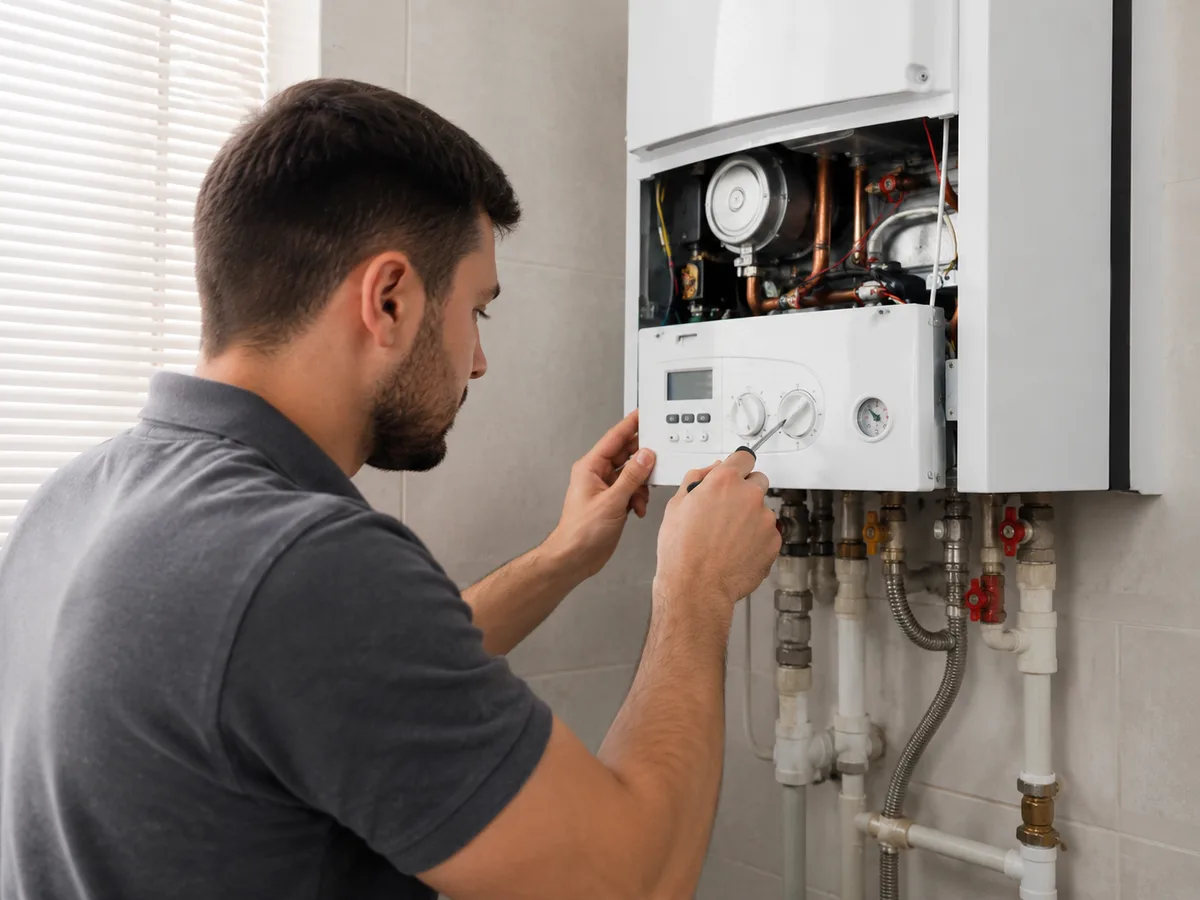
During the winter months, there's no need to explain how inconvenient it is when your boiler doesn't provide hot water. A large portion of the boiler repair requests we receive begins with the same complaint: "The boiler is working, but it's not producing hot water." The good news is that not every case indicates a serious malfunction, and in some situations you can identify the cause yourself before calling a technician. First, check the water pressure on your boiler. The pressure gauge should normally read between 1 and 1.5 bar. If the pressure drops below 1 bar, the boiler may not operate properly and may fail to heat the water. Restore the pressure using the filling loop, then check the hot water again. If the pressure is normal, the next possible cause is limescale or dirt buildup inside the plate heat exchanger. This is especially common in areas with hard water, where mineral deposits gradually accumulate inside the heat exchanger. As a result, the water no longer heats properly, the temperature fluctuates, or no hot water comes from the tap at all. In such cases, the heat exchanger may need professional cleaning or replacement. Another common cause is a faulty three-way valve. This component switches the boiler between central heating mode and domestic hot water mode. If the valve becomes stuck, the boiler can continue heating the radiators but will not switch to heating hot water when you open a tap. If your radiators are warm but there's no hot water from the tap, the three-way valve may be the problem. The flow sensor also plays an important role in the hot water system. When you open a tap, this sensor detects the water flow and signals the boiler to switch to hot water mode. If the sensor fails, the boiler doesn't recognize that a tap has been opened and won't start heating the water. In some cases, if nothing changes on the boiler's display when you turn on the hot water tap, it may indicate a faulty flow sensor. Weak hot water or water that constantly changes from hot to cold can also be caused by a defective temperature sensor. If the sensor measures the water temperature incorrectly, the boiler may shut off the burner too early or overheat the water. Diagnosing this component requires professional inspection. Low gas pressure or a faulty gas valve can also prevent the boiler from heating water properly. If the flame is weak, the boiler repeatedly turns on and off, or an error code appears on the display, the gas system should be inspected by a qualified technician. Never attempt to repair gas-related components yourself. A fault in the electronic control board (main control board) can also prevent the boiler from managing the hot water mode correctly, even though the unit appears to be operating normally. These issues are often caused by voltage fluctuations, moisture, or years of use. A faulty control board can only be accurately diagnosed using specialized equipment. One more important point: if the boiler is leaking water, you notice a burning smell or the smell of gas, hear unusual noises, the pressure frequently drops, or an error code remains on the display, do not continue using the boiler. Hoping that "it will keep working for a while longer" can turn a minor issue into a much more expensive repair. Regular maintenance helps prevent dirt and scale from building up in the heat exchanger, pump, valves, and other components. Having your boiler serviced at least once a year improves its reliability while reducing both gas and electricity consumption. If your boiler is running but not providing hot water, you can request a professional boiler technician through Ustamvar.az. The technician will diagnose the fault on-site, explain the cause of the problem, and agree on the repair cost with you before any work begins.
Blog
Boiler Not Providing Hot Water? Most Common Causes
Is your boiler running but not producing hot water? The problem could be caused by low water pressure, a faulty three-way valve, a plate heat exchanger, or other internal components. Learn the most common causes.