
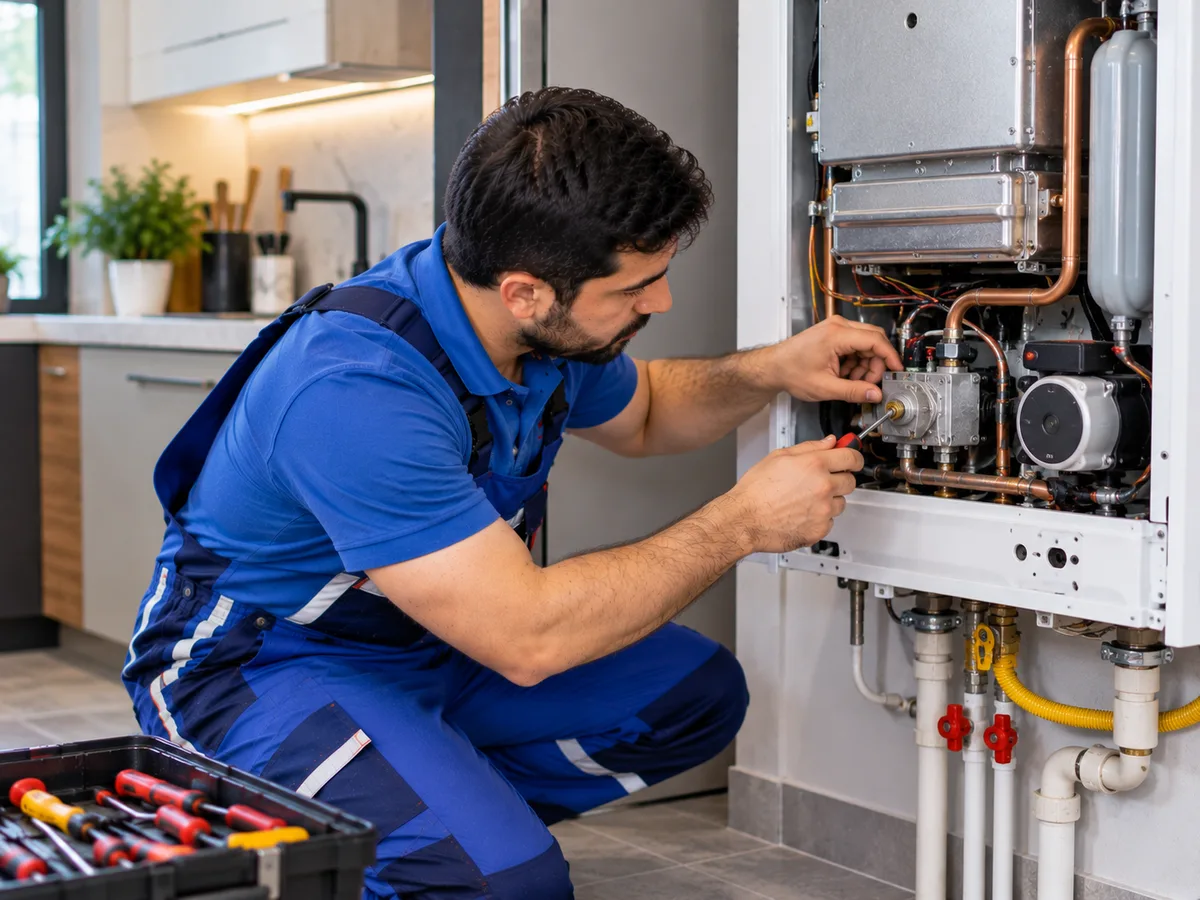
If a boiler fails to ignite, it can result in the loss of both hot water and heating. The boiler may attempt to start, you may hear the ignition sound, or an error code may appear on the display, but no flame is produced at the burner.
The cause of this problem is not always a lack of gas. Various components can affect the boiler's ignition process, including the ignition system, gas valve, flame sensor, gas pressure, air and flue system, and electronic control board.
First, check whether there is a gas supply to the property and whether the gas line leading to the boiler is open. If other gas appliances are also not working, the problem may be related to the gas supply rather than the boiler itself.
If the gas supply is normal but the boiler does not ignite, the ignition system should be checked. The ignition electrode creates the spark required to ignite the gas at the burner.
If the electrode is dirty, damaged, incorrectly positioned, or there is a problem with the high-voltage cable, the spark may become weak or may not be produced at all.
If you can hear the spark when the boiler attempts to start but no flame appears, it is necessary to determine whether gas is reaching the burner.
One of the main components that should be checked at this stage is the gas valve. The gas valve opens according to commands from the electronic control system and supplies the required amount of gas to the burner.
If the gas valve does not open, does not receive an electrical signal, or has a mechanical fault, the burner may fail to ignite even when a spark is present.
Checking and adjusting the gas valve requires specialized measuring equipment and professional technical knowledge. Because working on a gas system can be dangerous, this component should not be repaired without proper professional expertise.
Proper gas pressure is also essential for the boiler to ignite correctly. If the gas pressure is too low, the burner may fail to ignite properly and the boiler may enter an error or safety mode.
If the boiler produces a flame but it goes out after a few seconds, one possible cause is the flame sensor or ionization electrode. This component detects whether a flame has been established at the burner.
If the ionization electrode is dirty, oxidized, incorrectly positioned, or has an electrical connection problem, the control system may fail to detect the flame.
In this situation, the boiler closes the gas valve for safety, causing the flame to go out shortly afterward. On some models, a corresponding error code may also appear on the display.
A dirty burner can also affect the ignition process. Dust, combustion residue, and other contaminants can prevent the correct formation and combustion of the gas-air mixture.
If the burner openings are blocked, the flame may become uneven, delayed ignition may occur, or the boiler may fail to ignite completely.
The air supply and flue system also plays an important role in the safe operation of the boiler. A faulty fan, blocked air passage, or problem with the flue system can prevent the ignition process from starting on some boilers.
In boilers with sealed combustion chambers, an air pressure sensor or pressure switch monitors the safe operation of the system. If the required airflow is not confirmed, the control system may prevent the gas valve from opening.
Faults in temperature sensors and other safety sensors can also affect boiler ignition. If incorrect information is received from these sensors, the electronic control board may stop the startup process for safety reasons.
If the boiler does not ignite when a hot water tap is opened but operates normally in heating mode, the problem may be related to the domestic hot water flow sensor or flow turbine.
If the flow sensor does not inform the electronic control board that there is a demand for hot water, the boiler may not receive the command required to start the burner.
If the boiler fails to ignite in both hot water and heating modes, the gas supply, ignition system, gas valve, safety sensors, and electronic control board should be inspected in greater detail.
In some cases, the fault may be caused by the electronic control board. The board coordinates the operation of the ignition electrode, gas valve, fan, and various sensors.
If a relay, power circuit, or another component on the electronic board is faulty, a particular stage of the ignition process may fail to start.
An error code shown on the boiler display can provide important information during diagnosis. However, the same error code may have different meanings on different models, so it should be interpreted according to the manufacturer's instructions for the specific appliance.
Repeatedly resetting the boiler does not eliminate the underlying cause of the fault. If the problem continues to occur, the system should be professionally diagnosed.
During boiler diagnostics, the gas supply, ignition electrode, flame sensor, burner, gas valve, fan, flue system, safety sensors, and electronic control board should be checked step by step.
Adjusting gas valve pressure, working on the gas line, and repairing the combustion system should be carried out by a qualified professional due to the safety risks involved.
If you smell gas, do not attempt to start the boiler or operate electrical switches. The gas supply should be shut off safely if possible, the area should be ventilated, and the appropriate emergency gas service should be contacted.
A professional boiler repair technician can inspect the ignition system, gas valve, sensors, burner, and electronic control system to determine the exact reason why the boiler is not igniting.
Proper diagnosis helps identify the faulty component, avoid unnecessary replacement of parts, and safely restore the boiler to normal operation.